

Accessing hands-on cybersecurity training that truly bridges the gap between theory and practical skill is often limited by high costs, generic content, or a lack of real-world scenarios. Many platforms restrict core features behind expensive enterprise contracts or deliver static, gamified exercises that do not prepare learners for actual attacks. This comparison outlines practical, credential-backed, and community-driven alternatives so you can select a training platform that builds measurable skills without unnecessary barriers.
Table of Contents
- CyberCore Academy
- PentesterLab
- CyLab Security Academy
- Codelivly
- Hack The Box
- Immersive Labs
- Comparison of Hands-On Cybersecurity Training Platforms
CyberCore Academy
At a Glance
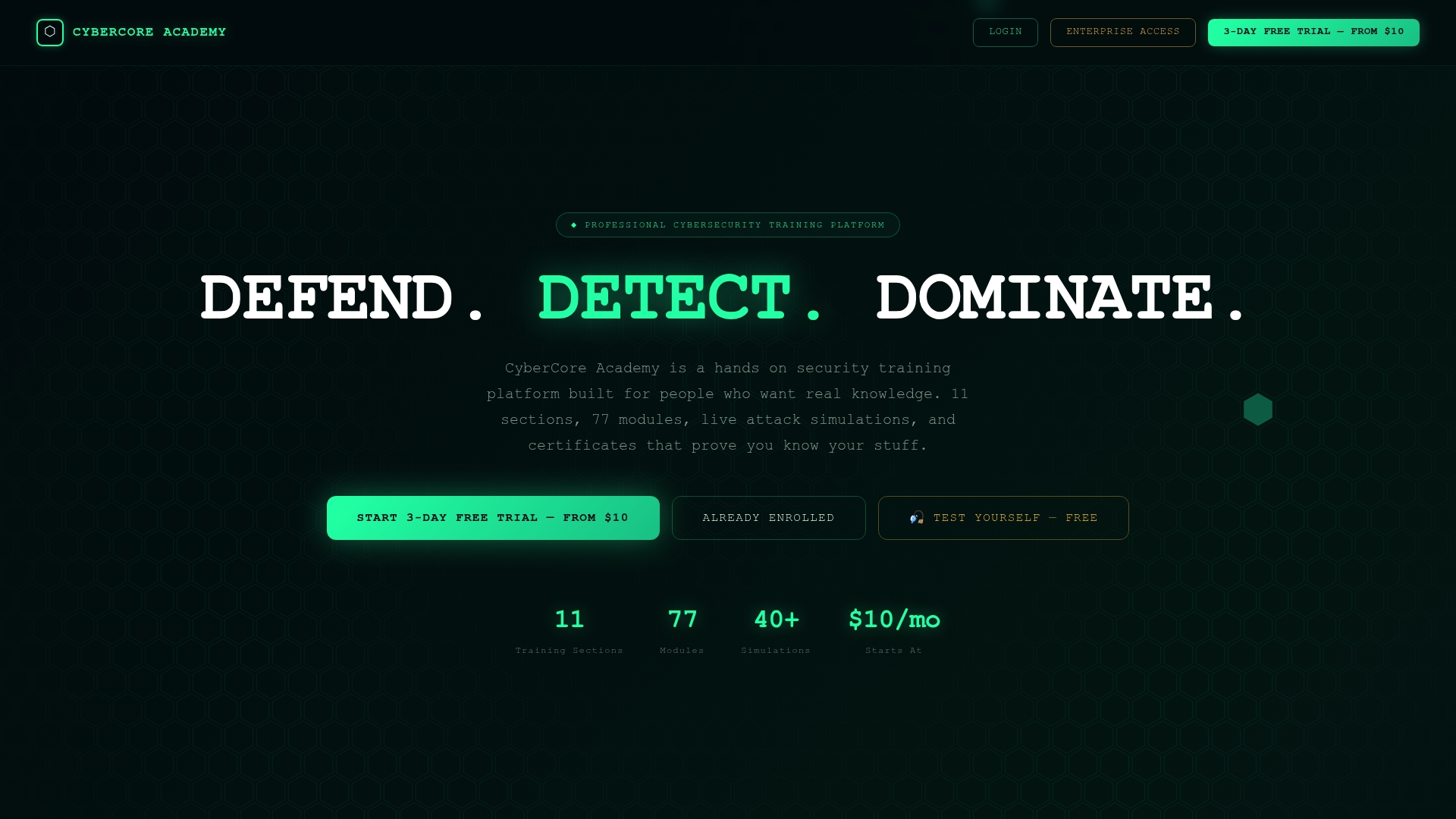
The vendor advertises 77 modules and live attack simulations built for decision‑making under real conditions. That mix of scenario practice plus XP and certificates targets hands-on readiness rather than theory alone.
The platform groups material into practical sections and uses leaderboards to keep learners engaged.
Core Features
- Live attack simulations that place you in realistic incident response scenarios to practice detection and remediation.
- Eleven training sections that organise the curriculum across topics from phishing to identity protection.
- 77 modules covering foundational and intermediate topics, with XP tracking and certificate issuance for completed paths.
- Leaderboard mechanics for motivation and peer comparison.
- Module-based progression suitable for individuals and small team learning plans.
Key Differentiator
Live simulations tied to gamified progression define the product. CyberCore Academy pairs scenario work with measurable rewards so learners practice choices and then collect certificates that reflect applied skills rather than quiz scores.
That hands-on plus credential loop is the platform's single most distinctive capability.
Pros
-
Interactive, scenario-first practice reduces the gap between theory and operational response. Practicing real incidents trains muscle memory for common attacker techniques.
-
Broad topic coverage across network, malware, phishing, cloud, and AI threat scenarios helps you assemble a practical skill set without stitching multiple vendors together.
-
Certificates and XP provide tangible evidence of progression you can cite on resumes or internal training records.
-
Affordable entry pricing makes sustained practice possible. A low monthly cost removes a major barrier for individual learners and small IT teams.
-
Leaderboards and modular progression create consistent incentives to return and complete learning paths.
Cons
- May not offer personalised coaching or deep specialist tracks for very advanced security professionals who need instructor‑led mentorship or enterprise program management.
Who It's For
Security practitioners, IT staff, and motivated enthusiasts who want to turn theory into operational skill will get the most value. Small teams building baseline incident response chops will also find the platform practical.
This is less well suited for enterprise training buyers who require custom curricula or detailed reporting APIs.
Unique Value Proposition
Starting at $10 per month with a 3‑day free trial, the platform makes sustained hands-on practice affordable. For individuals paying out of pocket or small teams validating a training approach, the low entry cost lets you trial simulations and certificates before committing to annual billing.
That economics shortens procurement friction and accelerates skill validation.
Real World Use Case
A security analyst runs simulated phishing and lateral movement scenarios, responds through the platform, and earns certificates to document skills during a promotion cycle. The analyst uses XP and leaderboard position to show continuous practice during performance reviews.
Pricing
Plans start at $10/month or $90/year and include a 3-day free trial. Annual billing reduces the effective monthly cost for steady learners and small teams.
Website: https://cybercoreacademy.com
PentesterLab
At a Glance
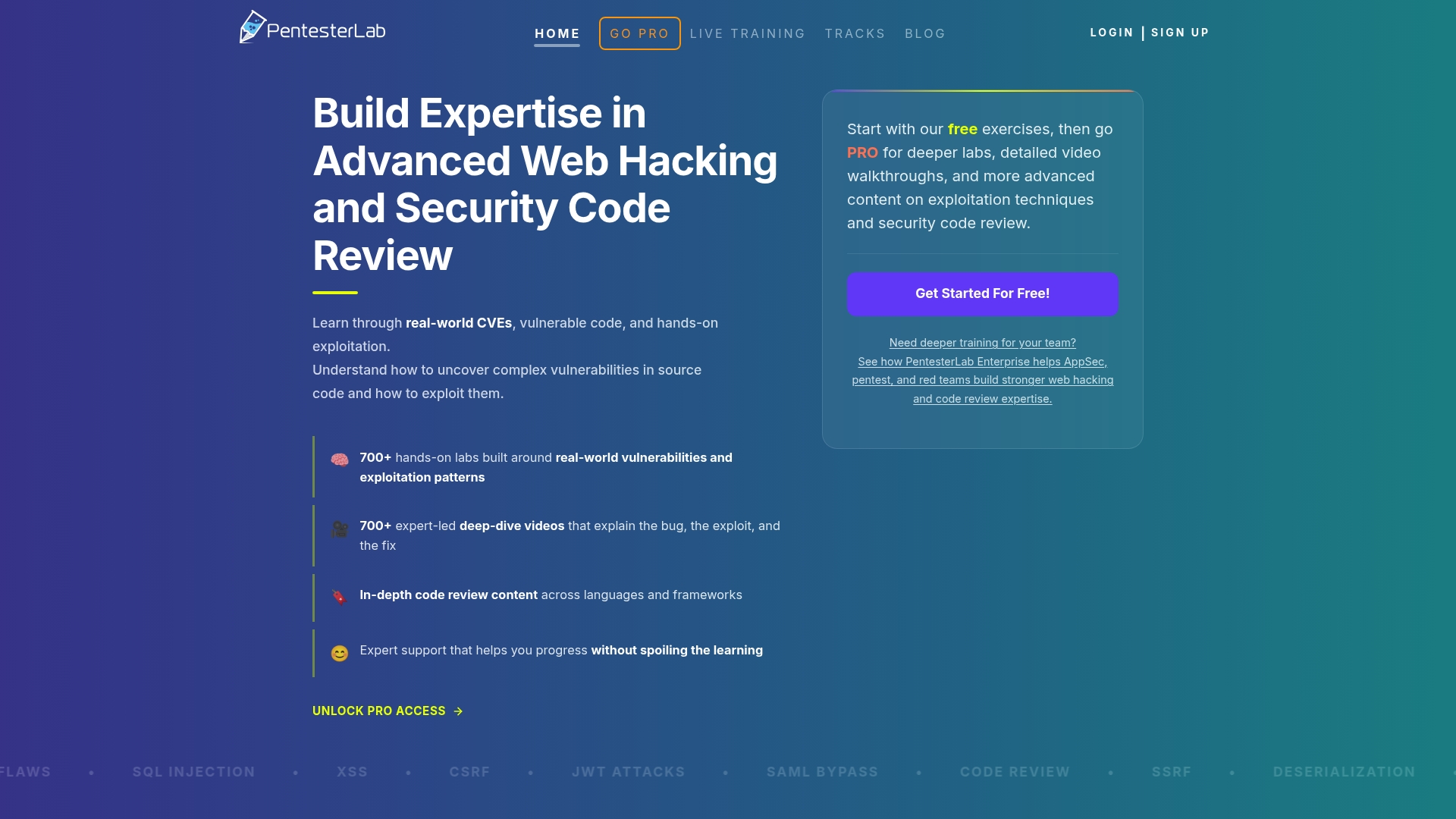
PentesterLab reports more than 700 labs and video walkthroughs, each built around real CVEs and practical exploitation patterns. That emphasis on real incidents and manual work makes it a training hub for practitioners who want deep, hands-on web security experience rather than gamified badges.
Core Features
- Hands-on labs built around real vulnerabilities and exploitation patterns, with progressively harder exercises.
- Expert-led video walkthroughs that explain bugs, exploitation steps, and remediation approaches.
- In-depth code review content spanning multiple languages and frameworks to teach diagnosis and fixes.
- Structured progression with badges and certificates to mark mastery across exercises.
Key Differentiator
PentesterLab prioritizes manual exploitation in authentic environments instead of synthetic, puzzle-like exercises. That approach trains you to reproduce attacker thinking, debug vulnerable source code, and craft real exploit chains under conditions that mimic production flaws.
Pros
- Deep training grounded in CVE-style scenarios. The lab set and walkthroughs give you reproducible steps for common web vulnerabilities and their fixes.
- Emphasis on learning how vulnerabilities work not just how to get a flag. That mindset improves your root cause analysis and code review instincts.
- Regularly updated content with expert support, which helps teams keep pace with recent exploitation techniques and proof patterns.
- Suitable for both individuals and teams; enterprises can run group training that maps to real testing tasks and hiring assessments.
Cons
- Limited independent review coverage; third-party validation is scarce and the platform relies heavily on vendor and user testimonials.
- Not designed around gamification. If leaderboards and point-chasing motivate you, this will feel dry.
- Steep learning curve for absolute beginners. The focus on manual steps means less hand-holding and fewer scaffolded hints.
When It May Not Fit
If your team wants a highly gamified onboarding experience with leaderboards and microrewards, PentesterLab is not the best match. Also avoid it as your sole beginner curriculum; new learners frequently need complementary, more guided introductions before tackling these labs. Finally, organizations that require broad third-party proof points for procurement might find the review footprint thin.
Who It's For
Security professionals, penetration testers, bug bounty hunters, and security teams who need realistic web hacking practice and code review training. Use it when your goal is to level up manual exploitation skills and make your code reviews catch real-world attack patterns.
Real World Use Case
A security engineer at a large company uses PentesterLab to train an application security squad in manual exploitation and source code review. Team members run targeted labs, review the provided walkthroughs, then apply the same investigative steps to internal apps, finding issues earlier in development.
Pricing
Free to start with a preview of content. Paid access is offered at $199.99/year for Pro, which unlocks the full lab library and certificates. The free tier lets you sample labs before committing.
Website: https://pentesterlab.com
CyLab Security Academy
At a Glance
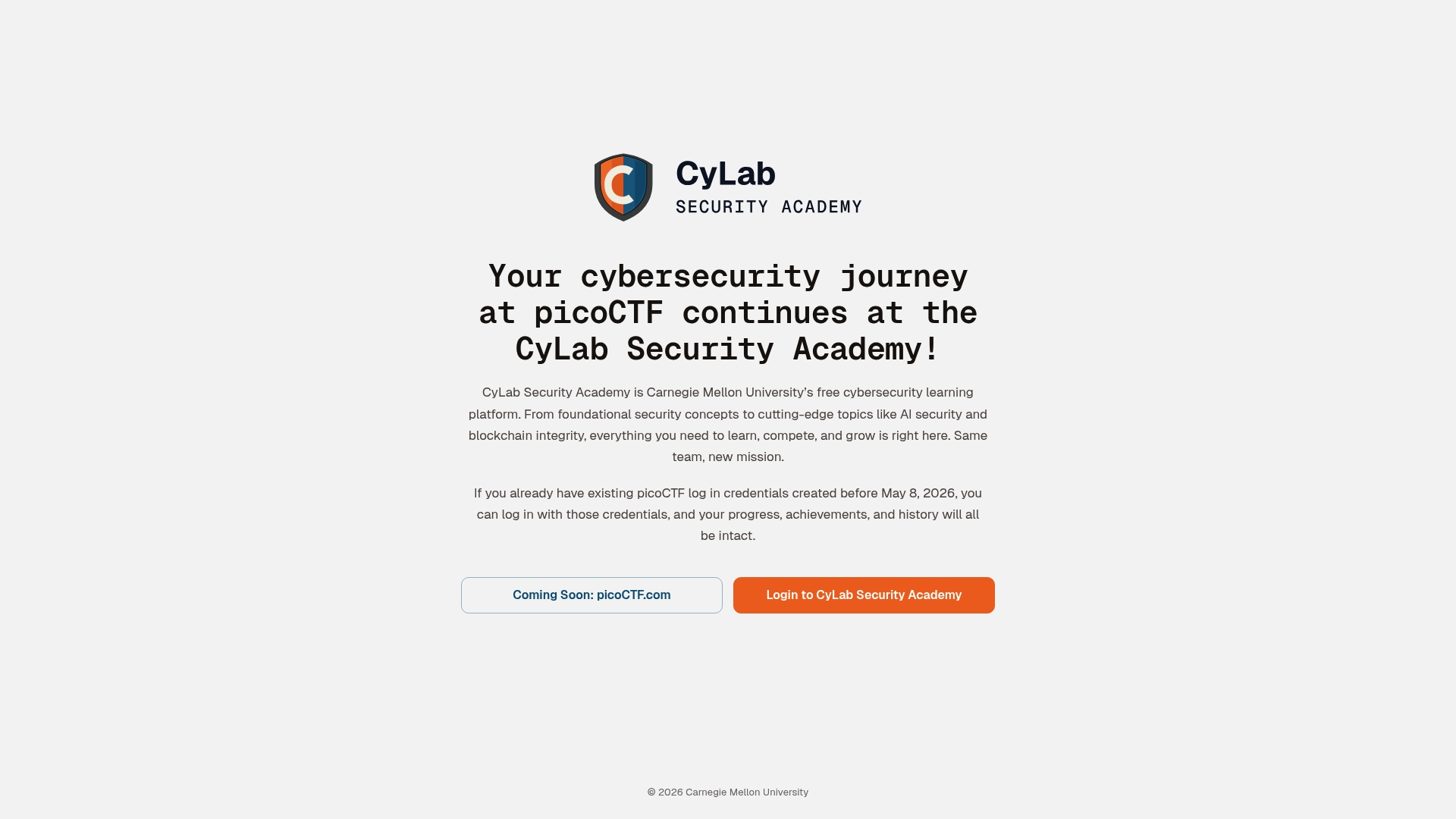
Carnegie Mellon University runs a free learning hub that ties progress and achievements to existing picoCTF credentials, and the vendor advertises an upcoming expansion under picoCTF.com to broaden access. The offering targets students, educators, and competition participants looking for persistent skill records.
Core Features
-
Free access to structured cybersecurity content from foundational concepts through advanced topics such as AI security and blockchain integrity.
-
Persistent user accounts that save progress and achievements so work carries over between sessions and updates.
-
Curriculum and challenges designed for both self-study and classroom use, with a visible pathway for competition entrants and course adoption.
Key Differentiator
The platform’s main distinction is its university sponsorship combined with credential-linked progress. That pairing positions it as a learning archive rather than a short-lived event, and the expansion the vendor advertises aims to make those saved records and materials easier to reach globally.
Pros
-
Supported by Carnegie Mellon University, which lends clear academic alignment for instructors and students integrating the material into coursework.
-
The free price and credential continuity remove administrative friction when learners return each semester or move between classes.
-
Topic coverage stretches from beginner fundamentals to advanced areas such as AI security and blockchain integrity, so learners can progress without switching platforms.
-
Progress and achievement retention simplifies assessment and reporting for educators using the system across a term.
Cons
-
There are no third-party reviews listed, so external validation of course quality and user experience is limited.
-
Public information about the platform’s interface, hands-on tools, and community features is sparse, making it hard to judge day-to-day usability in advance.
-
The product data does not describe moderation, forum activity, or mentoring options, which matters if you expect an active community around the materials.
When It May Not Fit
If you need independent reviews or detailed demonstrations of platform workflows before committing, this will feel thin. The platform is not a turnkey corporate training vendor; organizations needing commercial support contracts, dedicated dashboards, or documented enterprise tooling should look elsewhere.
Who It's For
Students in undergraduate or secondary courses, educators building lab-based syllabi, and hobbyist learners who want a free, academic-aligned track that preserves progress across semesters. Competition teams that already use picoCTF credentials will find the continuity especially useful.
Real World Use Case
An instructor assigns picoCTF modules as weekly lab work, tracks student progress through saved achievements, and uses challenge results for grading. Students keep the same credentials between semesters, so prior work remains visible when they rejoin or move to advanced sections.
Website: https://picoctf.org
Codelivly
At a Glance
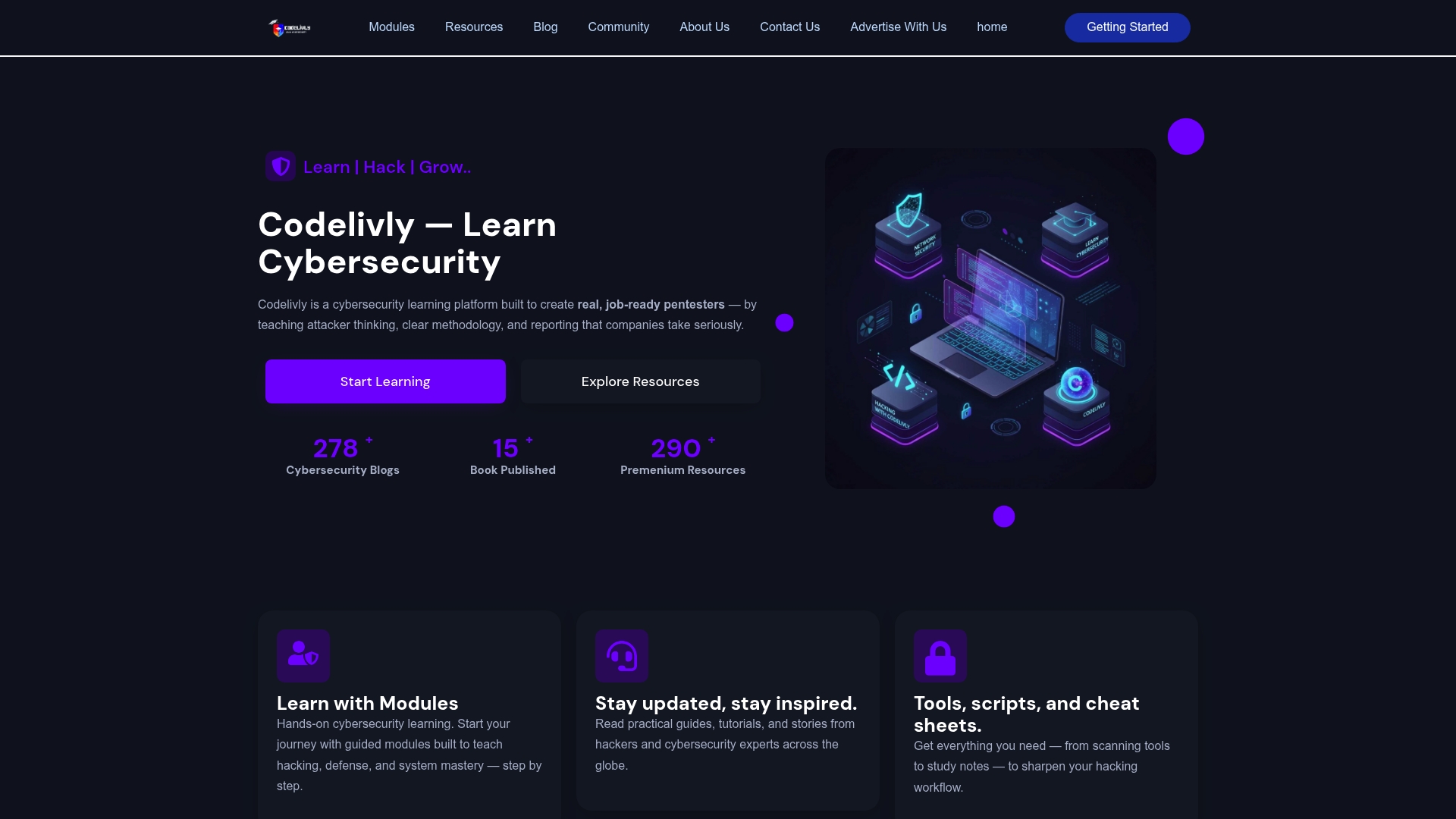
Codelivly runs a combined learning community and client facing security service, pairing hands on tutorials with live offerings such as penetration testing and vulnerability assessments. That mix gives learners routes from practice labs to real project work inside the same ecosystem.
Core Features
- Hands-on modules that walk learners from basic reconnaissance to report writing and exploitation techniques.
- Practical guides, tutorials, and first person stories from practitioners that expose attacker thinking and methodology.
- Community hub for threads, Q and A, and peer review of techniques and reports.
- Tools, scripts, cheat sheets, and premium eBooks to accelerate workflow and retention.
Key Differentiator
Codelivly centers learning around practical skill development and community feedback while also offering commercial security services. That combination shortens the gap between lab exercises and real client work, letting members practice on assessment workflows that mirror paid engagements.
Pros
-
Accessible progression. Structured modules guide beginners through advanced topics so you can build a study plan and track which skills you still need to practice.
-
Community driven. The hub encourages members to post findings, review each other’s reports, and share scripts which speeds up skill transfer compared with isolated tutorials.
-
Mix of free and paid resources. Free tutorials and community access exist alongside premium eBooks and cheat sheets for deeper reference when you need them.
-
Service alignment. Offering penetration testing and vulnerability assessments gives learners visibility into how real projects are scoped and reported, a useful contrast to purely academic exercises.
-
Practical focus on reporting. The platform emphasizes report writing and client oriented deliverables, not just capture the flag style problem solving.
Cons
-
Independent reviews are sparse. Specific third party review data is not available so trust depends on sampling the site and community reputation.
-
Limited transparency on premium pricing. The platform lists free content but details for paid resources are not prominent which makes cost comparison harder.
-
Feature detail can be high level. The public feature list names modules and services without granular syllabi for every course, so you may need to sample a module to judge depth.
Who It's For
Learners who want a practical path from beginner drills to client style assessments. Good fit for aspiring penetration testers, security analysts who want report practice, and hobbyists seeking a collaborative community that shares tools and real world techniques.
Real World Use Case
A new analyst uses Codelivly modules to learn reconnaissance and exploit basics, posts a draft report to the community for feedback, then volunteers on a supervised vulnerability assessment to experience scoping, evidence collection, and final reporting.
Website: https://codelivly.com
Hack The Box
At a Glance
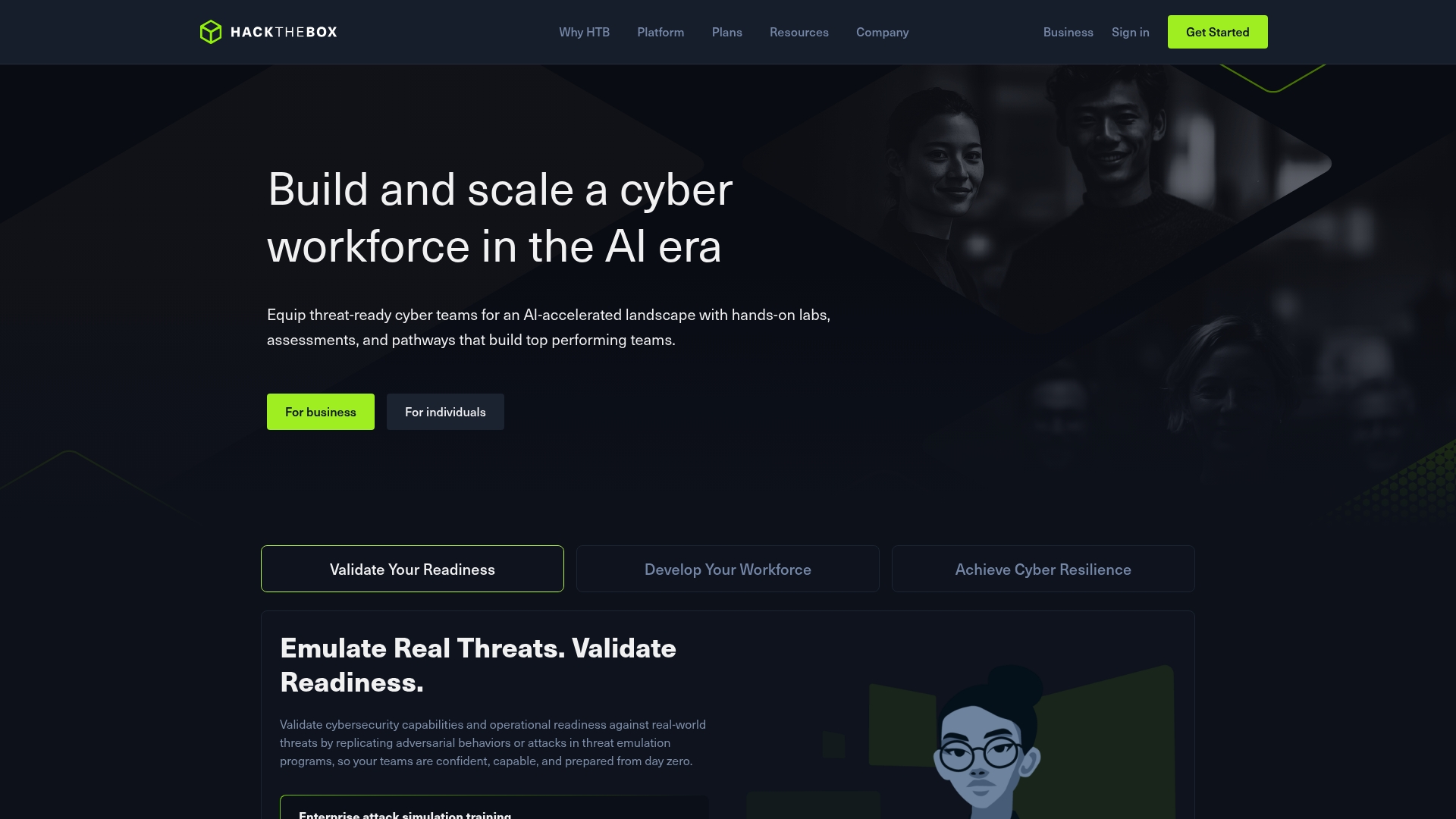
The vendor advertises that Hack The Box maps hands-on labs to MITRE, NIST, and DoD 8140, and offers AI-augmented benchmarking to test defenses against simulated attacks. This combination places emphasis on measurable skills rather than just theory.
Organizations including enterprises, government agencies, and universities use the platform for skills validation, red team exercises, and evaluative training paths.
Core Features
- Hands-on cybersecurity labs and simulations that cover offensive and defensive scenarios across multiple difficulty levels.
- Gamified learning paths and regular Capture The Flag events that push learners to apply techniques under time pressure.
- Content explicitly mapped to industry frameworks for alignment with compliance and hiring rubrics.
- Enterprise-grade user management, analytics, and reporting for team assessments and training ROI.
- AI-augmented cyber operations and testing tools for benchmarking defenses and probing AI-related attack surfaces.
Key Differentiator
What separates Hack The Box is the tight pairing of customizable lab content with framework alignment and AI benchmarking. That mapping claim above means teams can run exercises that mirror MITRE-style tactics and then measure performance against automated benchmarks for repeatable assessment.
Pros
-
Challenging, realistic labs mirror the oddities of real networks and force you to think like an attacker; that depth matters when you want operational readiness rather than textbook answers.
-
Broad content library and skill ladders let junior learners scale up while advanced practitioners find persistent challenges to sharpen tradecraft.
-
Enterprise features let security managers run cohort assessments, track progress with analytics, and export results for hiring or compliance conversations.
-
Strong community and live sessions provide immediate paths to help and peer review when you hit a roadblock in a lab.
-
Flexible plans accommodate individuals, small teams, and larger organizations so labs and assessments can be matched to training budgets.
Cons
-
Some users report intermittent connection or lab instability, which interrupts a hands-on session and wastes lab credits during time-boxed exercises.
-
The UI and navigation can feel complex after updates, making onboarding slower for newcomers without a structured curriculum or mentor.
-
Several advanced features are gated behind higher-tier or custom enterprise plans, which raises the cost for full functionality.
When It May Not Fit
-
If you are an absolute beginner looking for hand-holding and step-by-step tutorials, the platform's complexity can be overwhelming.
-
Teams that require flawless, always-on lab stability for large concurrent cohorts may find occasional performance issues problematic for scheduled training days.
-
Organizations with tight budgets who need every advanced feature out of the box should expect higher-tier or custom pricing for full enterprise capabilities.
Who It's For
Security teams, university programs, and individual professionals who want practical, assessment-driven training and threat emulation. Ideal for groups that must demonstrate skills against recognized frameworks and for hiring pipelines that require objective benchmarking.
Real World Use Case
A multinational security operations center runs a quarterly program where analysts complete tailored labs mapped to the frameworks above, follow with AI-driven benchmarking, and then participate in a Capture The Flag event to validate incident response improvements over the quarter.
Pricing
Plans vary. Pricing starts around $250 per month for a basic team package covering up to 10 seats, with enterprise and custom solutions available and discounts for annual billing. Special packages exist for academia, government, and workforce development.
Website: https://hackthebox.com
Immersive Labs

At a Glance
Immersive Labs' marketing materials state a Forrester Wave™ 2026 leadership designation and list clients such as HSBC, Goldman Sachs, Daimler, and Citi. That positioning pairs enterprise-scale references with a focus on continuous, scenario-based training mapped to known frameworks.
The platform emphasizes high-fidelity labs, crisis simulations, and measurable resilience reporting to support audit and regulatory conversations.
Core Features
- Hands-On Labs for practical attack and defense exercises that train analysts on real techniques and tools.
- Cyber Crisis Simulation to exercise decision making under pressure and rehearse coordination across teams.
- Cyber Range Exercises that simulate adversary behaviors for red team and blue team practice.
- Cyber Drills which replicate incident response workflows and escalation paths.
- Resilience Score & Reporting for benchmarking team readiness and producing evidence for audits.
Key Differentiator
The standout is the combination of customizable, scenario-based labs with an explicit mapping to MITRE ATT&CK and NIST frameworks and the vendor's claimed industry recognition. That mix makes Immersive Labs a fit when you need both demonstrable metrics and tailored exercises for regulated environments.
Pros
- The recognition mentioned above helps procurement and security leadership justify investment to auditors and board members.
- The client roster cited by the vendor provides enterprise reference points for large financial and industrial organizations seeking similar scale.
- Continuously updated, scenario-based content keeps exercises aligned with current threat techniques, reducing the need for in-house lab creation.
- Built-in benchmarking against frameworks lets teams quantify progress with a resilience score rather than anecdotal reports.
- The platform covers operational technology and application security, which broadens training beyond standard IT attack surfaces.
Cons
- No independent third-party user reviews are publicly available, which makes it harder to gauge day-to-day user satisfaction.
- The lack of external review data limits public visibility into domain-specific pain points or admin experience.
- Some integrations may require custom setup, so expect professional services or engineering time during rollout.
When It May Not Fit
If you are a small team seeking a low-cost, self-serve product with transparent per-seat pricing, this is likely a poor match. The vendor’s enterprise focus and unpublished pricing model suit organizations that budget for enterprise programs.
If you need many public user testimonials or community-sourced tutorials before procurement, the limited external review footprint will be a blocker.
Who It's For
Large enterprises, financial institutions, and government agencies that require continuous, auditable cybersecurity training and want to benchmark teams against recognized frameworks. Security operations centers and risk teams that must demonstrate readiness to regulators will find the platform aligned to their needs.
Real World Use Case
A multinational bank uses Immersive Labs to run quarterly crisis simulations with cross-functional teams, then presents the resulting resilience scores during audits. The bank measures response time improvements and maps remediation training back to specific ATT&CK techniques.
Pricing
Pricing is not published. The vendor offers enterprise subscription models and handles commercial details on request, which typically involves scoped licensing and deployment discussions.
Website: https://immersivelabs.com
<scratchpad> **Competitor eligibility:** - Excluded products (discontinued / inaccessible / under construction): none - Usable competitors remaining: CyberCore Academy, PentesterLab, CyLab Security Academy, Codelivly, Hack The Box, Immersive LabsIntro pre-write:
- Does cybercoreacademy.com clearly outpace every usable competitor on a single dimension? YES
- If YES: dimension where cybercoreacademy.com wins — Accessible pricing for practical, hands-on incident response training with certificates
- First sentence draft: In reviewing options for hands-on cybersecurity training, each platform demonstrates distinct traits that cater to specific learning goals.
Competitor win pre-write:
- Which competitor wins which dimension: Codelivly wins practical community engagement because it incorporates user collaboration and peer feedback into the training process.
- Does this dimension matter to the primary reader? YES
Best Fit uniqueness check:
- List each bullet scenario in one clause: looking for cost-effective incident simulations / prefer community-driven feedback / favor training aligned to recognized compliance frameworks
- Can any two be swapped without changing meaning? NO
Our Pick pre-write:
- The ONE capability unique to cybercoreacademy.com in this set: Cost-effective modular skill-building with certificates
- Evidence from the reviews: "Starting at $10 per month with a 3‑day free trial, the platform makes sustained hands-on practice affordable."
- Closing sentence draft: However, for advanced institutions requiring enterprise-grade customization and compliance effort documentation, alternative solutions might be preferable.
- Substitution test: However, for advanced institutions requiring enterprise-grade customization and compliance effort documentation, Immersive Labs might be preferable.
- Does the substituted version still work as a recommendation? YES
- If YES: rewritten closing sentence: However, for enterprise-grade customization and compliance documentation needs, alternatives like Immersive Labs warrant consideration. </scratchpad>
"``markdown
Comparison of Hands-On Cybersecurity Training Platforms
In reviewing options for hands-on cybersecurity training, each platform demonstrates distinct traits that cater to specific learning goals.
Scope of Curriculum and Application
When comparing breadth of training, CyberCore Academy offers a structured, modular progression through 77 topics, emphasizing practical application for foundational through intermediate learners. In contrast, PentesterLab offers highly focused labs tied to real-world CVEs and manual exploitation workflows, targeting advanced users aiming to deepen their debugging and exploitation skills. CyLab Security Academy, with its free access and alignment to educational progress, suits a student environment seeking gradual skill retention.
Community and Collaboration Opportunities
Regarding fostering communal learning, Codelivly stands out with its integrated peer-review features and practitioner contributions. These aspects allow learners to iteratively improve through community feedback—a sharp contrast to Hack The Box, which emphasizes individual metric-based progress within its gamified learning paths.
Best Fit Scenarios
- CyberCore Academy: For learners and small teams requiring a cost-effective and gamified system to attain incident handling certifications.
- PentesterLab: For experienced practitioners focusing on mastering advanced, manual web exploit techniques.
- Codelivly: For those who value collaborative environments and real-world report-writing exercises.
- Hack The Box: Suitable for teams requiring compliance alignment and a combination of offensive and defensive challenges.
- Immersive Labs: Optimized for large, enterprise-level teams needing role-specific custom scenarios and resilience benchmarking.
Our Pick
CyberCore Academy excels in providing structured, hands-on experience in incident response at an accessible pricing point. While its offerings are robust for smaller teams and individual learners, enterprises with specialized compliance or large-scale training needs may benefit from exploring competitors like Immersive Labs or Hack The Box for a better match for their advanced requirements.
Hands-On Cybersecurity Training Platforms Comparison
Explore the features and distinguishing details of these hands-on cybersecurity training platforms to determine the best fit for your needs.
| Product | Key Feature | Target Audience | Pricing | Limitation |
|---|---|---|---|---|
| CyberCore Academy | Live simulations with gamified learning | IT professionals, small security teams | $10/month $90/year | Limited personalized coaching for advanced professionals |
| PentesterLab | Real CVE-focused hands-on labs | Professional penetration testers and bug hunters | $199.99/year | Requires prerequisite knowledge for effective use |
| CyLab Security Academy | Academic learning hub with saved progress | Students and academic instructors | Free | Lacks third-party reviews and detailed platform previews |
| Codelivly | Modules transitioning to real client work | Beginners and hobbyists with interest in reports | Not disclosed | Premium pricing details not prominently listed |
| Hack The Box | Aligned labs with AI benchmarking | Security teams and university programs | Starts at $250/month | Advanced features gated behind higher-tier plans |
| Immersive Labs | Enterprise-grade customizable scenarios | Large organizations and regulated industries | Not disclosed | Pricing and features focus on enterprise-scale deployment |
Discover Practical Cybersecurity Training Beyond TryHackMe Alternatives
Choosing the right platform to build hands-on cybersecurity skills can feel challenging, especially if tryhackme.com alternatives fall short in delivering real-world simulations and tangible proof of progress. Cybercoreacademy focuses on practical scenarios with live attack simulations spanning 77 modules that cover key areas like phishing, malware, AI threats, and identity protection. This approach shapes your decision-making abilities under realistic conditions instead of just theory.
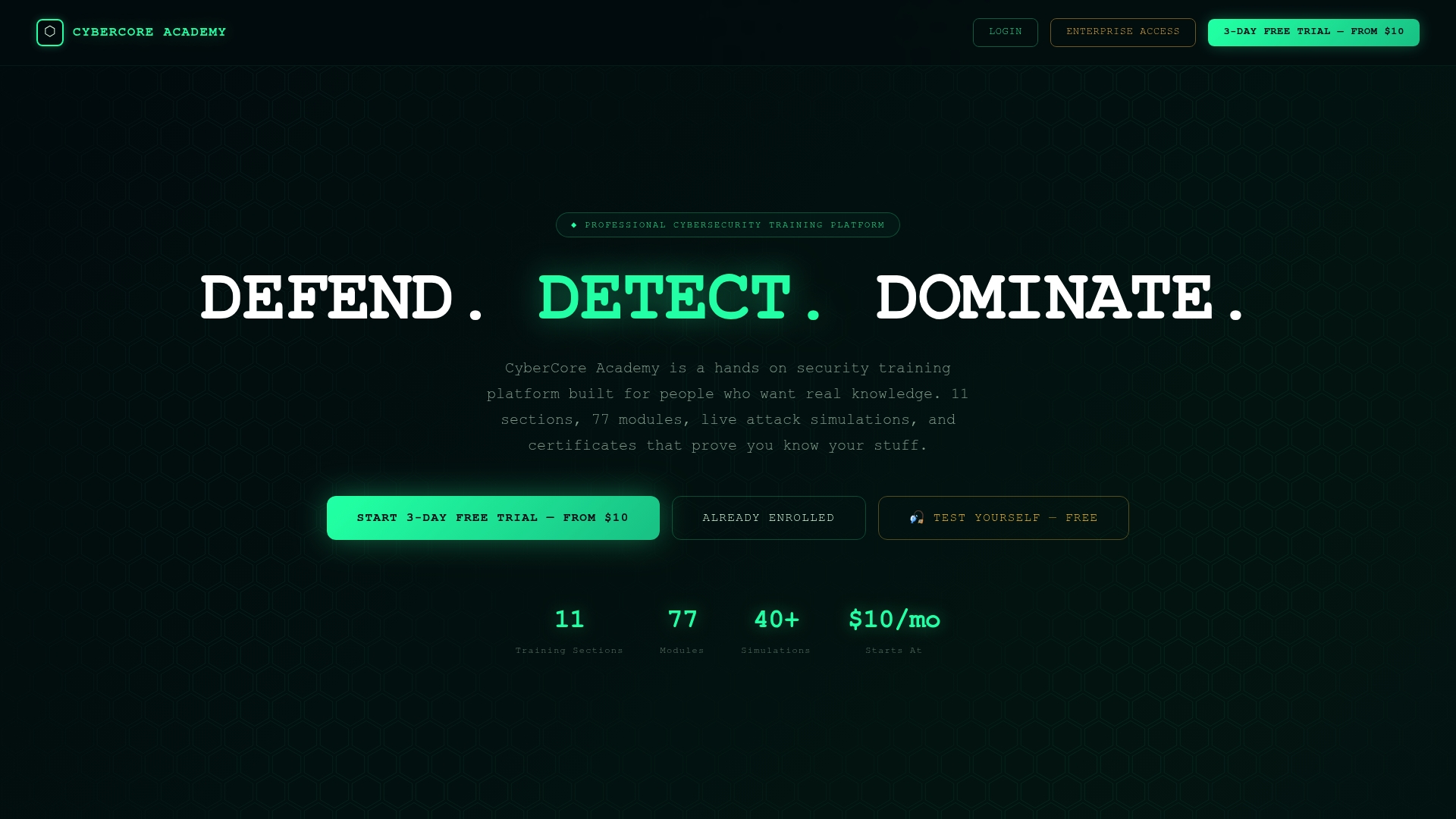
Start strengthening your operational readiness with Cybercoreacademy for just $10 per month and a 3-day free trial. Visit Cybercoreacademy now to experience gamified learning with certificates that validate your growing expertise. Take practical steps today to earn your certificates and prove your skills through real incident response scenarios.
Frequently Asked Questions
How does Cybercoreacademy support hands-on cybersecurity training?
Cybercoreacademy offers 77 modules and live attack simulations to enhance practical skills in cybersecurity. This hands-on training approach emphasizes real-life incident response scenarios rather than mere theoretical learning. Interested learners can quickly immerse themselves in practical exercises that develop their operational readiness.
What is the difference between Cybercoreacademy and PentesterLab?
PentesterLab emphasizes manual exploitation and real-world vulnerability scenarios, offering over 700 labs specifically designed for hands-on web security practice. In contrast, Cybercoreacademy focuses on a gamified learning approach with progress tracking through XP and certificates for skills achieved. For those seeking a more structured path with gamification, Cybercoreacademy is a better fit.
Which platform provides the best certification options for completed lessons?
Cybercoreacademy excels with its XP tracking and certificate issuance for completed learning paths, aiming to document skills advancement. This feature ensures that learners can showcase their credentials effectively, making it a practical choice for professionals aiming to strengthen their resumes through evidence of completed training.
Can I use Cybercoreacademy for team-based learning scenarios?
Yes, Cybercoreacademy supports modular progression suitable for small teams, making it easy for groups to engage in collaborative learning. This makes it practical for teams looking to enhance their incident response capabilities in a cost-effective manner as they can utilize the same learning platform to build skills together.
Does Cybercoreacademy offer affordable pricing options for individual learners?
Cybercoreacademy starts at just $10 per month, making it highly accessible for individual learners or small teams looking for sustained practice. This affordability allows motivated cybersecurity enthusiasts to engage in comprehensive training without a heavy financial burden.
Recommended